

The Chevrolet Trax is the Secret to Stylish Affordability
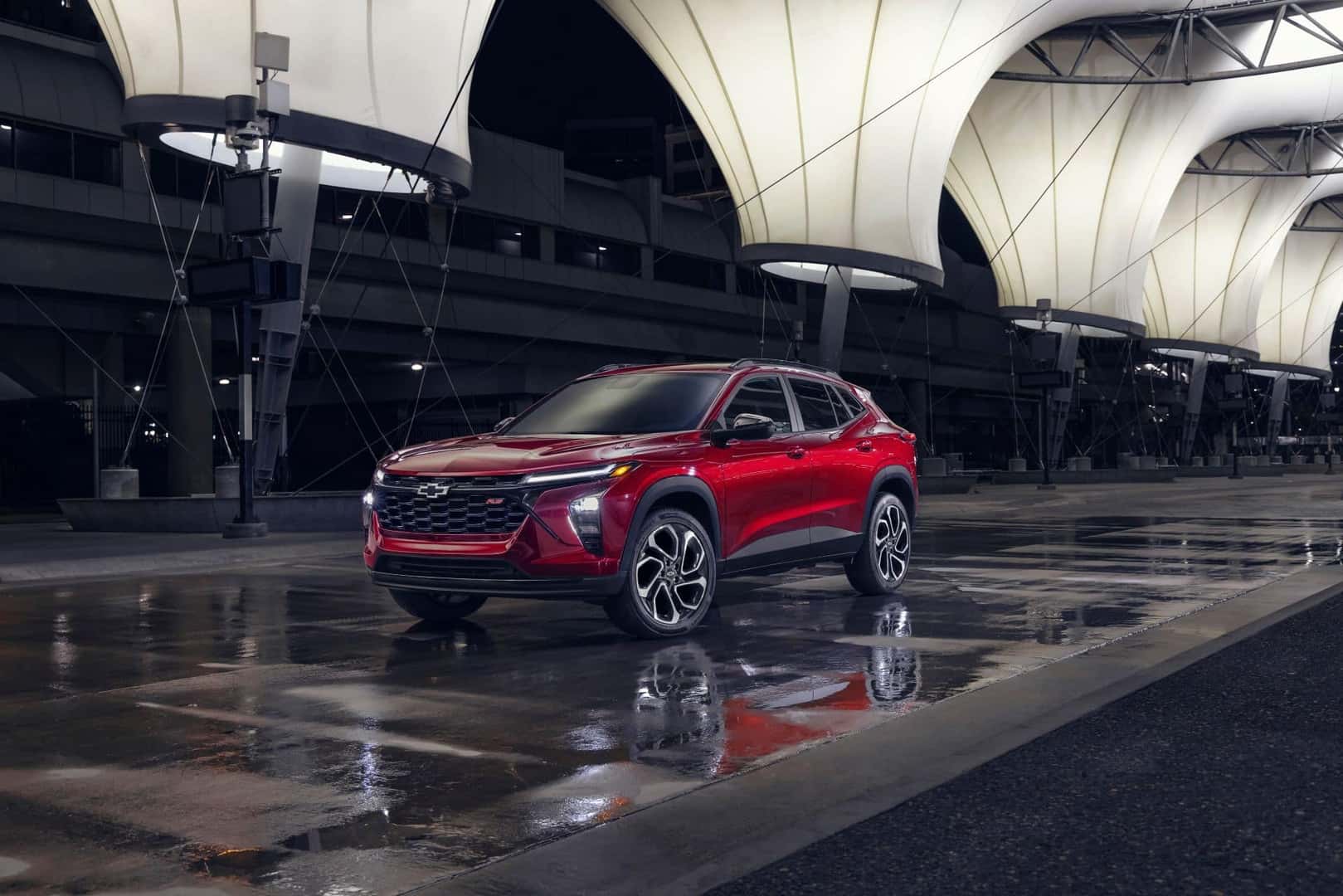
Remember the Chevrolet Vega, the Chevette, or, more recently, the Chevrolet Spark? Chevrolet probably wishes you didn’t. The brand has offered a handful of entry-level cars over the past few decades, and many of them struggled to be anything but a “cheap car.” Even the first-generation Trax was fairly undistinguished, but the second-generation Trax, which first appeared for the 2024 model year, is another thing entirely. Autoblog decided to check out this standard-bearer of US-badged affordability, and this Sharp Chevrolet post tells you what they found.
To look at the Trax is to wonder whether the designers completely forgot they were designing Chevrolet’s least expensive model, with a starting MSRP of $21,700. The front end is a full-on version of the design used across the rest of the Chevrolet crossover lineup. Relative to its subcompact size, the body looks long and lean, with subtle character lines and a jaunty kick-up of the window line toward the rear. The only sign of exterior economizing is the steel wheels on the base LS, though the bolt-on wheel covers hide this pretty well. All other trims sport alloy wheels. Overall, the Trax is as nicely executed as any other Chevrolet crossover, just smaller. Autoblog noticed this but conducted their review to answer the question of “…whether the Trax merely looks like a bargain or actually feels like one after you’ve lived with it.”
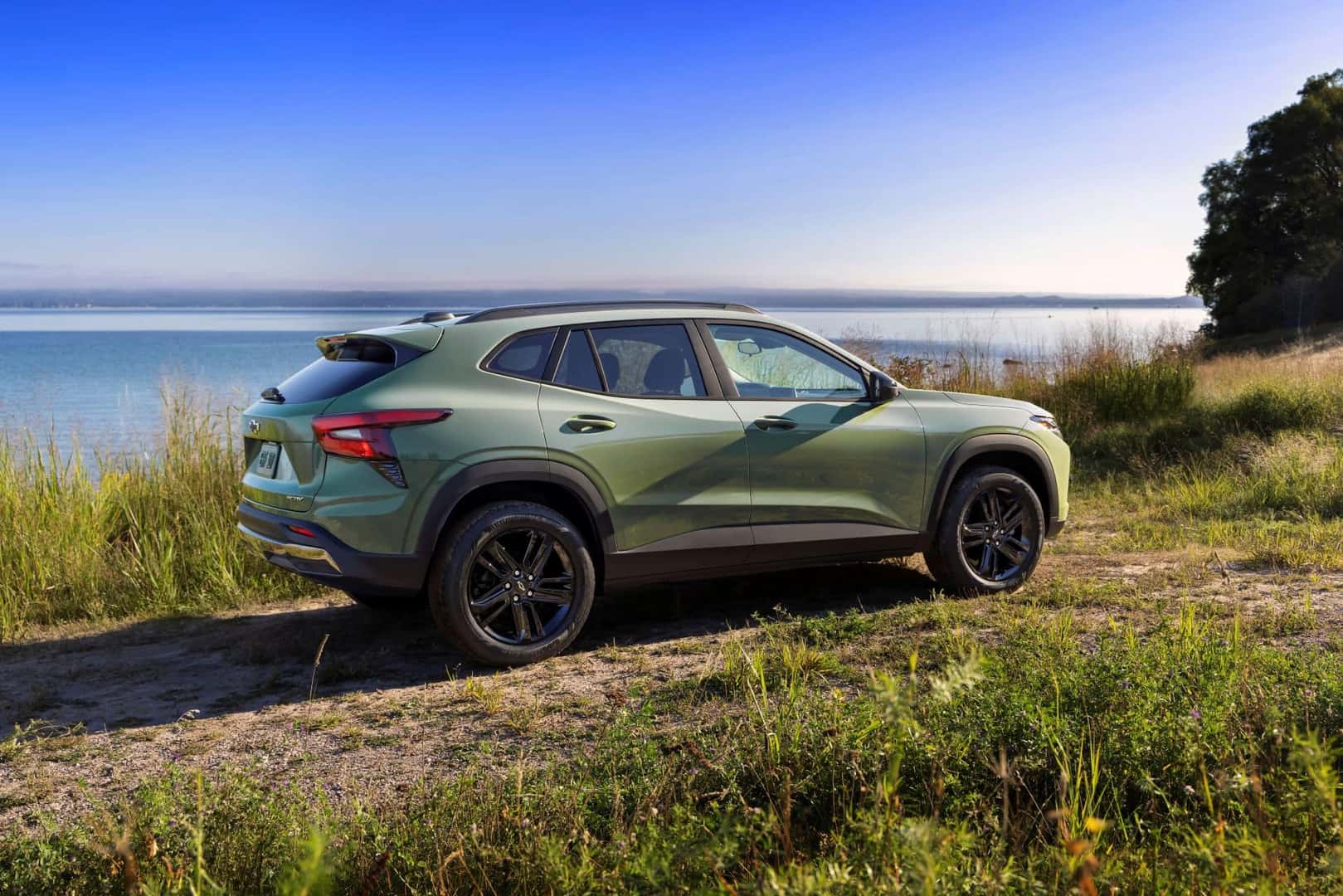
The spec sheet may suggest that the first place to look for weaknesses is under the hood. There is no question that a 1.2-liter 3-cylinder engine, even when turbocharged, sounds pretty small. After all, on the other end of Chevrolet’s size spectrum, you can get a V8 with over five times that displacement. And while its 137 horsepower and 162 lb-ft of torque won’t have you prowling the streets looking to drag race, Autoblog points out that it goes from 0 to 60 mph in under 9.0 seconds, which means it gets around town just fine and shouldn’t have you break a sweat entering the freeway onramp. Autoblog notes a bit of turbo lag, after which the power swells nicely, so you get accustomed to planning your acceleration moves a half-second ahead.
Helping with the Trax’s sprightliness is the 6-speed automatic transmission, rather than the expected CVT, though Autoblog thought the gear changer could be a bit more decisive. From the transmission, all the power goes to the front wheels. There is no AWD option. No one would think twice about this if the Trax didn’t have a long roof and SUV proportions. The small engine promises good fuel economy, and the Trax delivers 28 city / 32 highway / 30 combined. It will probably take a hybrid to get much better than that, and no hybrid comes in the low to mid-20s.
Autoblog found the Trax punching above its MSRP in dynamics as well. “Steering is well weighted and unexpectedly communicative for something this inexpensive. The brake tuning is also nicely judged—easy to modulate, predictable, and refreshingly free of the harshness that often plagues entry-level crossovers.” They later added, “What did surprise me was the overall refinement. Road and wind noise were both better suppressed than I expected, lending the Trax a more grown-up demeanor at speed than its price might imply.”
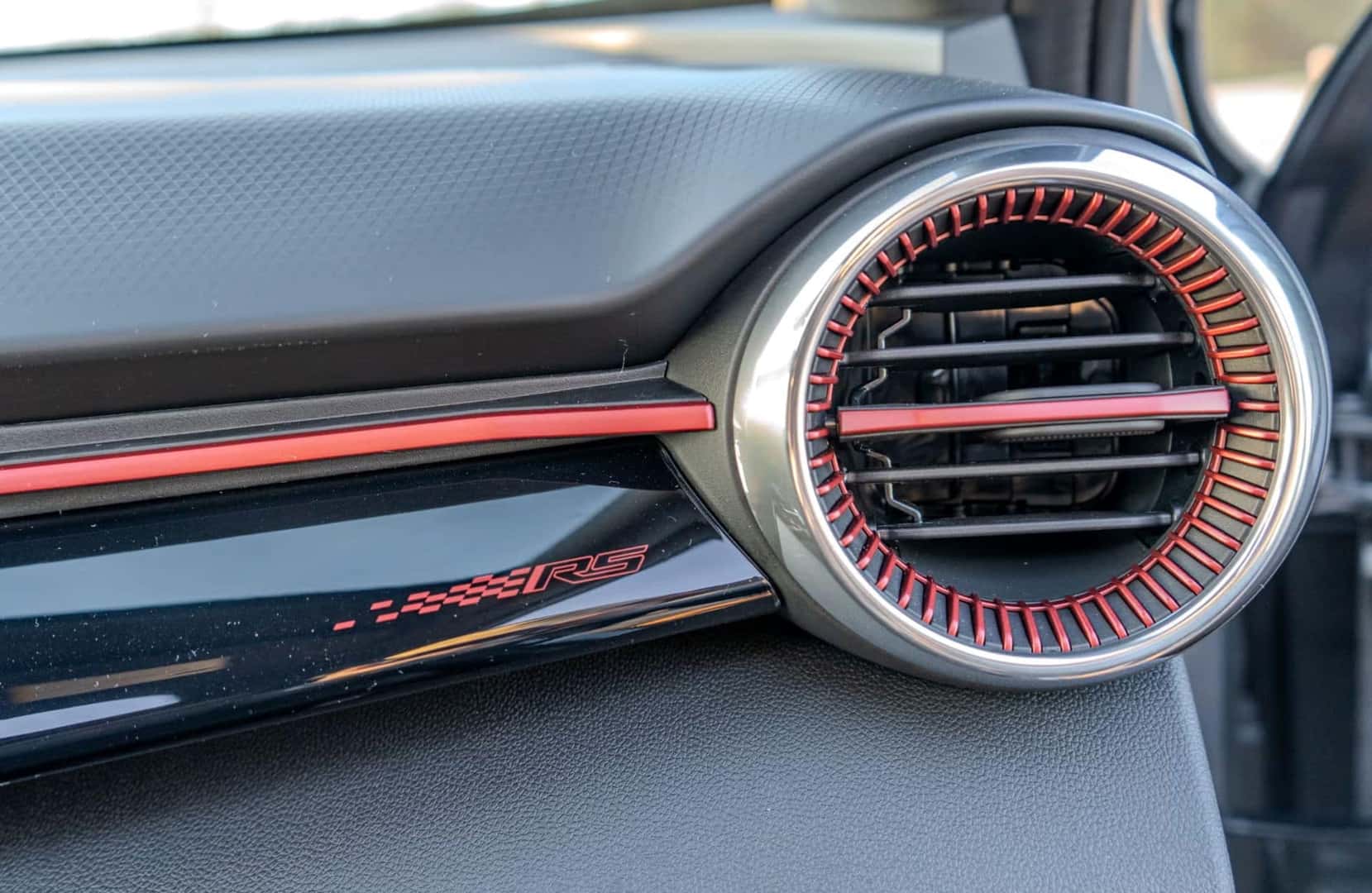
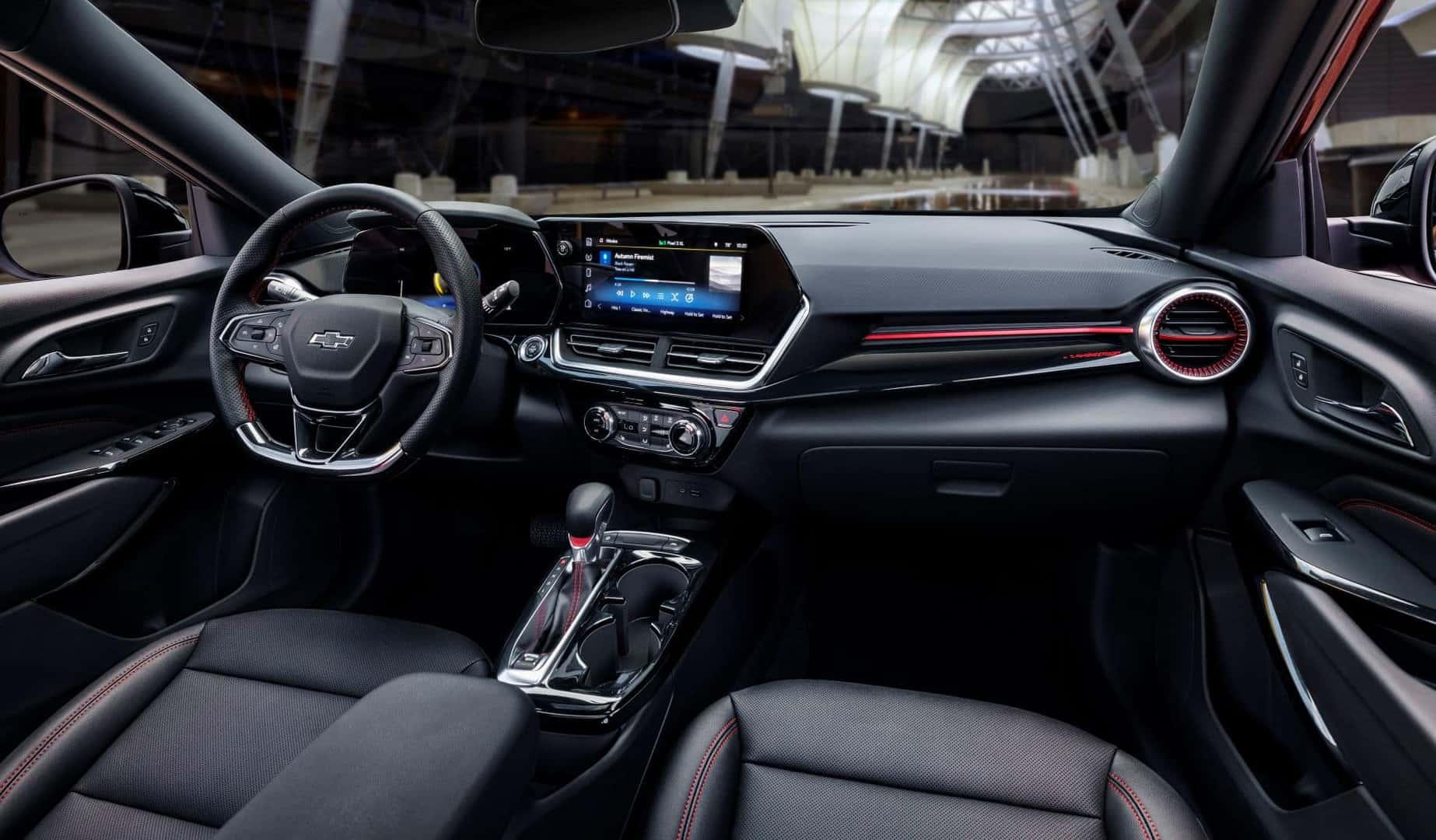
The Trax keeps up appearances in the cabin as well. The dash has an attractive, driver-centric design. The tri-spoke steering wheel with a flattened bottom is handsome, and the bright housings and intricate details on the round climate vents are particularly unexpected. LS and 1RS models get an 8-inch center touchscreen with analog gauges, while LT, 2RS, and ACTIV trims sport an 11-inch center screen with a digital driver display. All trims feature Wireless Apple CarPlay® and Android Auto™, along with a nice set of physical climate controls. The climate system is automatic on the aforementioned upper trim levels.
Another Trax surprise is the rear seat, which offers 38.7 inches of legroom for rear passengers. For reference, that is half an inch more than the recent mid-size Malibu sedan, providing plenty of space for full-size adults.
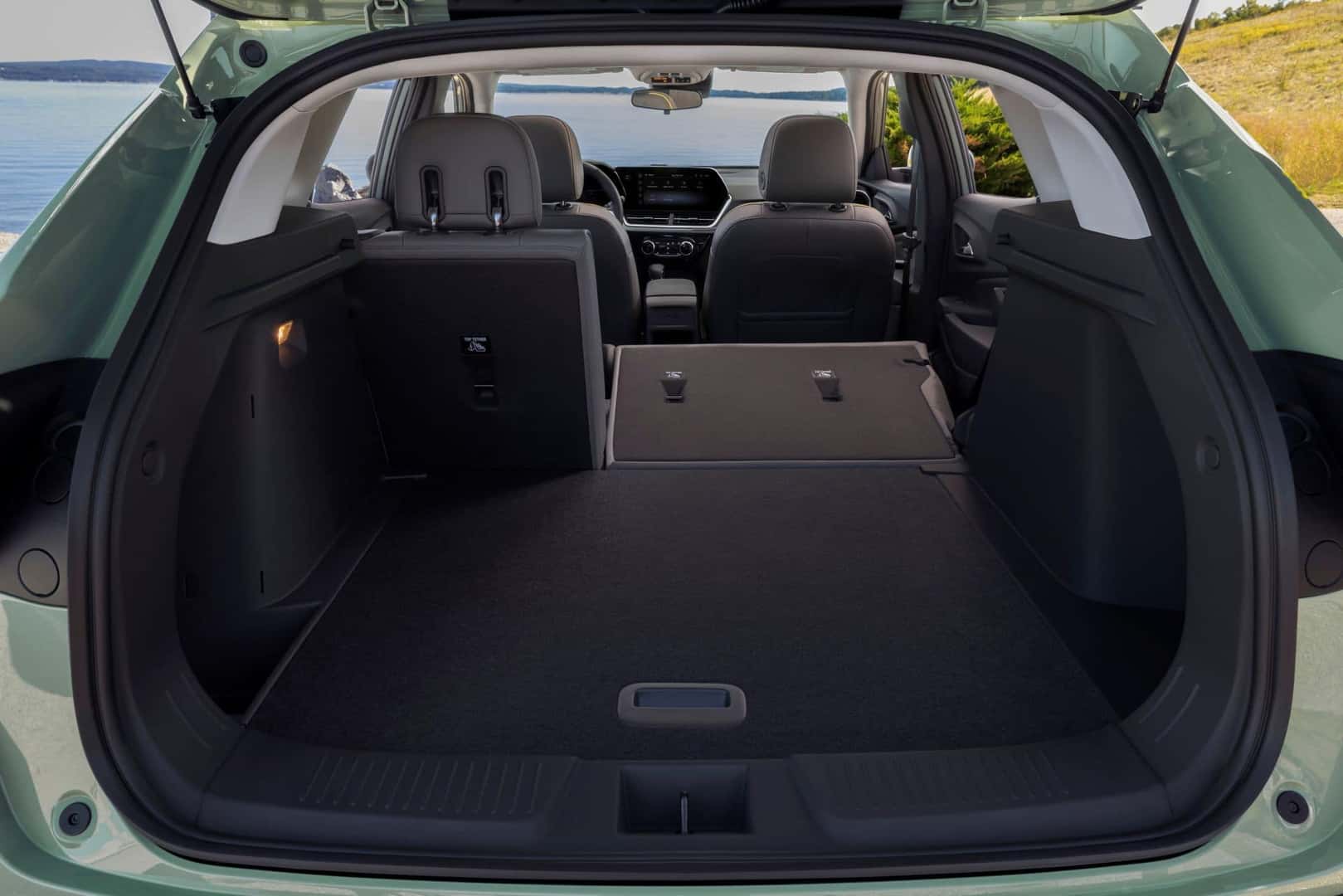
Behind the rear seats, there is 25.6 cubic feet of cargo space, enough for two large and two medium-sized bags. The rear seats split 60/40 for passenger and cargo flexibility. Fold both sides down, and the cargo space expands to 54.1 cubic feet. You’ll find this space larger and more usable than in many other subcompact models. There is even a temporary spare beneath the floor.
The Trax doesn’t pretend to be a luxury car, performance car, or tough off-roader. As Autoblog puts it: “What it does do is something more modest, and arguably more valuable to its buyers: it makes affordable transportation feel like a deliberate choice rather than an unwilling compromise, and that is perhaps the Trax’s greatest party trick.”
When the average new-car price is over twice its starting MSRP and entry-level models are disappearing from many brands, the Trax has arrived at just the right time. If you need additional sensible transportation and would rather it not look like it, visit Sharp Automotive and give the Trax a test drive.
0 comment(s) so far on The Chevrolet Trax is the Secret to Stylish Affordability